How To Frame a Football Jersey & Protect Its Autograph
A signed football jersey is more than just another piece of sports memorabilia. It might be a jersey from your favorite NFL player, something you had signed at a game, or a collectible you've been holding onto for years. Some jerseys have significant monetary value, while others carry memories that are impossible to replace. Either way, the last thing you want is to damage the autograph or fabric while trying to display it.
At The Frame Pros, we've worked with collectors who want to get their jerseys out of storage and onto the wall. One of the first things I explain is that framing an autographed jersey requires a little more thought than framing a photograph or poster. We need to consider how the jersey will be mounted, how the signature will be protected, and how the finished display will look in your home or office.
A properly designed frame should accomplish two things: make the jersey look great and help preserve its condition. Here's what I recommend considering before framing your signed football jersey.
What's The Best Way to Frame a Signed Football Jersey?
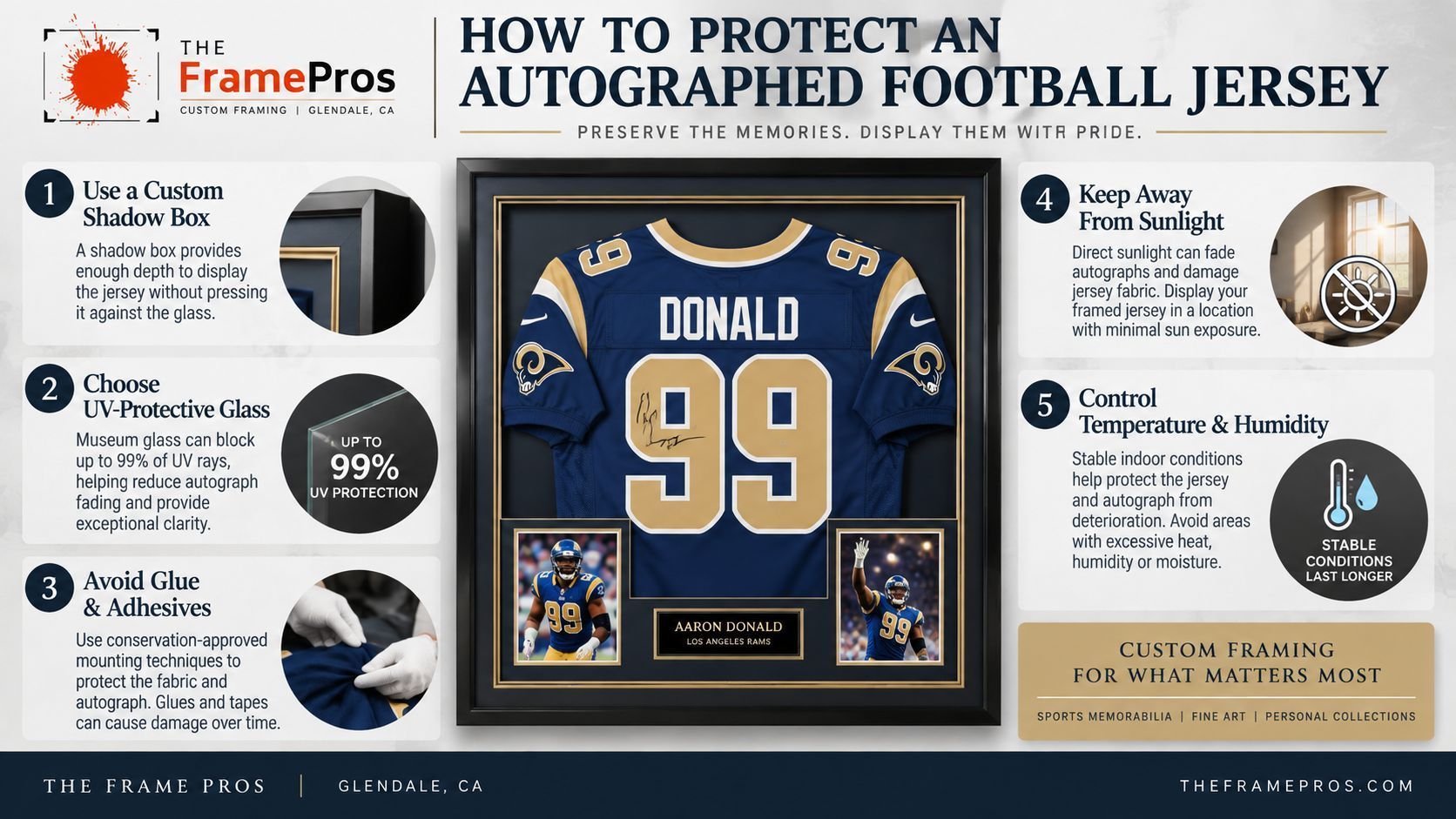
For most signed football jerseys, I recommend a custom shadow box with conservation-quality backing, appropriate mounting supports, and UV-protective glazing. This combination allows the jersey to be displayed without pressing it against the glass while helping protect the fabric and autograph from unnecessary damage.
A football jersey is a three-dimensional object, even though the fabric itself is relatively thin. The sleeves, shoulders, stitching, patches, and lettering all contribute to its shape. Trying to fit everything inside a shallow picture frame can create unwanted folds or pressure points.
A custom shadow box provides additional depth and gives us more control over how the jersey is positioned. We can arrange the sleeves, display the player's name and number, and make sure the autograph remains visible.
For a closer look at how these frames work, I've explained the construction and design possibilities in our guide to
shadow box framing.
How Do You Frame a Football Jersey Without Damaging It?
The mounting process is one of the most important parts of framing a collectible jersey. A frame can look beautiful from the outside, but improper mounting materials or techniques may cause problems years later.
Before we begin, we look at the jersey's condition, fabric, autograph placement, and overall dimensions. We also discuss how the owner wants it displayed. Some collectors prefer showing the entire back of the jersey, while others want a more compact presentation that includes photographs or additional memorabilia.
Use Proper Mounting Techniques
A jersey needs enough support to maintain its shape without being stretched or pulled unnaturally. Depending on the fabric and design, conservation-minded mounting may involve carefully placed stitching, fabric supports, or other methods that hold the jersey securely against the backing.
For valuable memorabilia, the goal is to minimize permanent alterations. We want the jersey to remain in good condition and, when practical, allow it to be removed from the frame in the future.
Avoid Glue and Permanent Adhesives
One mistake people make with DIY jersey framing is using glue, tape, or other permanent adhesives to hold the fabric in place. These materials can leave residue, discolor the jersey, and make future removal difficult.
The concern becomes even greater with signed jerseys. Adhesives and certain mounting materials can interact with fabrics or inks over time, creating damage that may be difficult or impossible to reverse.
For valuable autographed memorabilia, I recommend discussing the mounting method with a professional framer before anything is attached to the jersey.
Should You Pin or Sew a Football Jersey Into a Frame?
There isn't one mounting method that's appropriate for every jersey. Some textile-mounting techniques use carefully positioned stitches to provide support, while other projects require different methods based on the fabric, condition, and collectible value.
Ordinary pins can create unnecessary holes or place pressure on the fabric. Poorly positioned stitching can also distort the jersey or damage important details. A professional framer should evaluate the piece and select a method that minimizes those risks.
Our
sports memorabilia framing services are designed around the individual item, allowing us to consider both presentation and preservation before selecting materials.
How Do You Protect an Autograph From Fading?
Autograph preservation is one of the biggest concerns collectors have when framing a signed football jersey. The signature may be the most valuable part of the entire piece, especially when it belongs to a well-known player or has been authenticated.
Unfortunately, autographs can fade over time. The rate of deterioration depends on the type of ink, fabric, lighting conditions, and surrounding environment. Some signatures remain vibrant for decades, while others become noticeably lighter after prolonged exposure.
Protect the Jersey From UV Light
Ultraviolet light contributes to the deterioration of many inks, dyes, and fabrics. A signed jersey displayed near a sunny window may receive substantial light exposure throughout the day, increasing the risk of fading.
I generally recommend keeping valuable jerseys away from direct sunlight, even when they're framed with UV-protective glazing. Reducing overall light exposure is one of the simplest ways to help preserve an autograph.
Choose Museum Glass or UV-Protective Acrylic
Museum glass is a popular option for signed memorabilia because it combines high UV protection with excellent clarity and reduced reflections. Certain museum glass products block up to 99% of UV radiation, helping reduce one of the major causes of fading.
For larger frames, UV-filtering acrylic may also be worth considering. Acrylic is lighter than glass, and certain products offer both UV protection and anti-reflective properties.
The best choice depends on the dimensions of the frame, where it will be displayed, and the level of protection needed.
Our article comparing museum glass vs. regular glass explains the differences in UV protection, glare reduction, and clarity.
It's important to understand that UV protection doesn't eliminate every risk. Visible light can also contribute to fading, and certain inks are naturally more vulnerable than others. Protective glazing is an important part of preservation, but it should be combined with sensible display conditions.
Control Temperature and Humidity
Excessive heat and humidity can affect both the fabric and autograph. Environmental fluctuations may contribute to material deterioration, especially when a jersey is displayed in an area that experiences significant temperature changes.
Avoid placing valuable framed memorabilia near fireplaces, heating vents, or areas with persistent moisture problems. A relatively stable indoor environment is generally better for long-term preservation.
Should a Football Jersey Touch the Glass?
A signed football jersey should generally have adequate separation from the glazing rather than being compressed directly against it. The additional space helps protect the fabric, lettering, and autograph while allowing the jersey to maintain a more natural appearance.
Direct contact can create problems under certain environmental conditions. Moisture may become trapped between materials, and pressure from the glazing can flatten raised lettering or other details.
Shadow boxes help address these concerns by providing sufficient depth for the jersey and its mounting system. The exact spacing depends on the fabric, frame construction, and any additional memorabilia included in the display.
How Should a Football Jersey Be Folded for Framing?
The way a jersey is folded has a major impact on the finished presentation. A poorly arranged jersey can look uneven, hide important details, or make the autograph difficult to see.
Most collectors want the player's name and number visible, but the ideal layout depends on where the signature is located. A jersey signed across the back number may require a different arrangement than one signed on the front chest.
Displaying the Front or Back of the Jersey
For many football jerseys, the back is the preferred display side because it features the player's name and number. This creates an instantly recognizable presentation, especially for NFL collectibles.
However, some jerseys have autographs on the front, near the shoulder, or along a specific number. In those situations, we may recommend displaying the front or adjusting the fold to highlight the signature.
I always encourage collectors to consider what they want people to notice first. The autograph, player's number, and overall jersey design should work together rather than compete for attention.
Can You Frame a Football Jersey Without Folding It?
Yes. A football jersey can be displayed fully extended, although doing so requires a considerably larger frame.
A full-length presentation allows more of the jersey to remain visible and may reduce the need for folding. The tradeoff is increased frame size, weight, and cost, along with the additional wall space needed for display.
For most residential projects, a carefully arranged jersey offers a good balance between appearance and practical dimensions.
Can You Frame a Football Jersey With Other Memorabilia?
Absolutely. In fact, combining a signed jersey with related memorabilia can make the display much more personal.
Collectors frequently want to incorporate photographs, tickets, trading cards, certificates of authenticity, championship patches, or small plaques. These items can help tell the story behind the jersey and create a more complete display.
A signed Los Angeles Rams jersey, for example, could be paired with a photograph of the player and a ticket from a memorable game. A college football jersey might include a team photograph, championship patch, or award.
Larger objects, such as signed footballs, may also be incorporated into custom displays, although they require additional depth and specialized mounting.
The most important design consideration is balance. Adding too many objects can make the frame look crowded and distract from the jersey itself. I generally recommend establishing one main focal point and arranging the remaining items around it.
How Much Does It Cost to Frame a Football Jersey?
The cost of framing a football jersey depends on several factors, including the dimensions, frame style, glazing, mounting requirements, and overall complexity of the project.
A relatively simple jersey display will generally cost less than a large custom shadow box containing a signed jersey, photographs, tickets, and additional memorabilia.
Some of the biggest pricing considerations include:
| Framing Component | How It Affects the Cost |
|---|---|
| Frame size | Larger frames require more materials |
| Frame style | Premium finishes and materials may increase pricing |
| Shadow box depth | Deeper frames can require specialized construction |
| Museum glass | Premium glazing adds to material costs |
| Custom mounting | Complex layouts require additional labor |
| Additional memorabilia | Multiple objects may require more space and mounting |
| Custom matting | Decorative layouts and multiple openings add complexity |
I recommend getting a quote based on the actual jersey rather than relying on a generic price estimate. Two jerseys of similar size can have very different framing requirements depending on their condition, autograph placement, and desired presentation.
For a more detailed explanation of pricing, read our guide on
how much it costs to frame a jersey.
DIY vs. Professional Football Jersey Framing
Framing a football jersey yourself is possible, particularly when the jersey has little collectible value and the display is primarily decorative. Ready-made jersey frames and display cases are available in various sizes, and some collectors enjoy assembling their own displays.
The decision becomes more complicated with autographed jerseys. The mounting method, glazing, backing materials, and environmental protection can all influence how well the jersey holds up over time.
| Feature | DIY Jersey Framing | Professional Jersey Framing |
|---|---|---|
| Frame dimensions | Usually standard sizes | Customized to the jersey |
| Mounting | Depends on materials and experience | Selected for the specific item |
| UV protection | Depends on glazing purchased | Conservation glazing options |
| Display layout | Limited by available frame | Custom arrangement |
| Additional memorabilia | May require modifications | Designed into the frame |
| Preservation | Depends on technique | Conservation-focused options |
A professional frame isn't automatically a guarantee against deterioration, but working with someone familiar with memorabilia preservation can help avoid common mistakes.
There's also an important difference between making memorabilia look attractive and protecting its condition. I discuss that distinction in our article about
displaying vs. preserving sports memorabilia.
Where Should You Display a Framed Football Jersey?
Once your jersey is framed, the next consideration is where to hang it.
Home offices, entertainment rooms, sports rooms, and personal memorabilia collections are popular display locations. A framed jersey can become a focal point, particularly when the frame design complements the surrounding furniture and décor.
For valuable signed jerseys, I recommend choosing a wall that receives minimal direct sunlight and remains relatively stable in temperature and humidity.
The frame should also be installed using appropriate hanging hardware. Large shadow boxes can become surprisingly heavy, especially when they contain glass, multiple layers of matting, and additional memorabilia.
A secure installation helps protect both the jersey and the surrounding space.
Professional Football Jersey Framing in Los Angeles
Los Angeles has a passionate football community, and collectors throughout the region own everything from current Rams and Chargers jerseys to vintage NFL memorabilia and college football collectibles.
At The Frame Pros in Glendale, we work with clients looking for custom framing solutions that complement their memorabilia while helping protect its condition. Signed jerseys require particular attention because the autograph, fabric, and overall collectible value should all be considered before framing begins.
Our approach starts with understanding the piece and how the owner wants it displayed. From there, we can discuss frame dimensions, mounting techniques, glazing options, and additional memorabilia.
For readers unfamiliar with the process, our
custom framing questions and answers explain several common considerations before starting a framing project.
Frequently Asked Questions
Can you frame a signed football jersey without damaging it?
Yes. A signed football jersey can often be framed using supportive mounting techniques and conservation-quality materials that minimize unnecessary alterations. The appropriate method depends on the jersey's fabric, condition, and autograph placement. Valuable jerseys should be evaluated before mounting, particularly when permanent adhesives, pins, or stitching could affect their collectible condition.
Will an autograph fade inside a picture frame?
An autograph can fade even when the jersey is framed. UV exposure, visible light, temperature, humidity, and the type of ink used all influence how signatures age. UV-protective glazing can help reduce fading, but it cannot guarantee permanent preservation. Keeping the framed jersey away from direct sunlight and maintaining stable indoor conditions provides additional protection.
Should a football jersey touch the glass?
Generally, a football jersey should not be compressed against the glass. Adequate spacing helps protect raised lettering, fabric, and autographs while creating a more natural display. Shadow box frames provide additional interior depth, allowing the jersey to be mounted without pressing it against the glazing. The appropriate spacing depends on the jersey and frame design.
What size frame do you need for a football jersey?
Frame dimensions depend on the jersey's size, how it will be folded, and the amount of memorabilia included in the display. A fully extended jersey requires a much larger frame than one arranged with its sleeves folded behind the body. Custom framing allows the dimensions to be selected around the jersey rather than forcing it into a predetermined size.
Is museum glass worth it for a signed NFL jersey?
Museum glass is worth considering for valuable signed NFL jerseys because it provides excellent clarity, reduced reflections, and high UV protection. These benefits can improve the display while helping reduce light-related deterioration. However, museum glass does not eliminate every cause of fading, so proper placement and environmental conditions remain important.
Can you frame a football jersey without folding it?
Yes. A football jersey can be framed without folding it, provided the frame is large enough to accommodate the entire garment. This presentation allows the sleeves, shoulders, and body to remain visible. However, it requires more wall space and generally increases framing costs. The best approach depends on the jersey's dimensions and the desired appearance.
Can you remove a football jersey from a professionally framed shadow box?
In many cases, yes. Conservation-minded mounting techniques can allow a jersey to be removed from its frame without unnecessary damage. However, removability depends on the original mounting method. Collectors who may want to remove, sell, or reframe their jerseys should discuss reversible mounting options with their framer before the project begins.
Can you frame a football jersey with a certificate of authenticity?
Yes. A certificate of authenticity can be incorporated into a custom jersey display, although some collectors prefer keeping the original certificate stored separately for safekeeping. A copy may be included inside the frame alongside the jersey, photographs, or other memorabilia. The appropriate approach depends on the certificate's importance and the overall display design.
How long can a signed football jersey last inside a frame?
A properly framed jersey may remain in good condition for many years, but there is no guaranteed lifespan for the fabric or autograph. The materials used, mounting method, ink composition, and display environment all influence long-term preservation. Conservation framing and UV-protective glazing help reduce certain risks, but regular inspection and careful placement remain important.
Where can I get an autographed football jersey framed in Los Angeles?
The Frame Pros in Glendale provides custom framing services for sports memorabilia collectors throughout the Los Angeles area. Signed football jerseys can be displayed using custom shadow boxes, conservation materials, and protective glazing selected for the individual piece. Collectors can bring their jerseys and related memorabilia for a consultation to discuss design options, preservation considerations, and pricing.
Protect Your Signed Football Jersey With Custom Framing
A signed football jersey deserves a frame that does more than make it look attractive. Proper mounting, protective glazing, and thoughtful design can help preserve the autograph while turning the jersey into something you'll enjoy displaying for years.
At The Frame Pros, we understand that every piece of memorabilia has a story behind it. Some jerseys are valuable collectibles, while others represent a favorite player, a memorable game, or an important moment in someone's life. Our goal is to create a display that respects both the object and the memories attached to it.
If you have a signed football jersey that's been sitting in storage, bring it to our Glendale framing shop. We'll discuss the available materials, explain the framing process, and help you select a design that complements your collection.
Contact The Frame Pros to schedule a custom football jersey framing consultation.
— Frank Sumen, The Frame Pros