UV Protection in Framing – How To Protect Art From Fading
Frames don’t just display art at its finest. The right frame also protects art from the elements — exposure to air, dust, moisture, or even the harmful effects of light.
Without light, the beauty of art wouldn’t be visible. Too much light, however, can destroy art by gradually fading it away. Learn what UV damage is in the context of art and how frames from FramePros can stop it in its tracks.
What Is UV Damage?
Ultraviolet (UV) light comes both from the sun and artificial light sources. It degrades pigments in artworks over time, leading to discoloration or fading.
Light doesn’t have to be direct to cause UV damage. Even indirect light from a window that doesn’t face an artwork or a light fixture pointed in an opposite direction can damage art.
Research suggests that up to 40% of fading in artworks can be attributed to UV light exposure. This damage doesn’t show up immediately, but once it accumulates, UV damage to artworks is irreversible.
How Framing Provides UV Protection
The glazing (glass) in
art frames can provide an anti-UV barrier that protects art. Normal glass lets through a significant amount of UV radiation, but specialized glazing blocks up to 99% of UV rays. Proper framing also protects artworks from dust, moisture, and impacts, keeping its beauty and value intact.
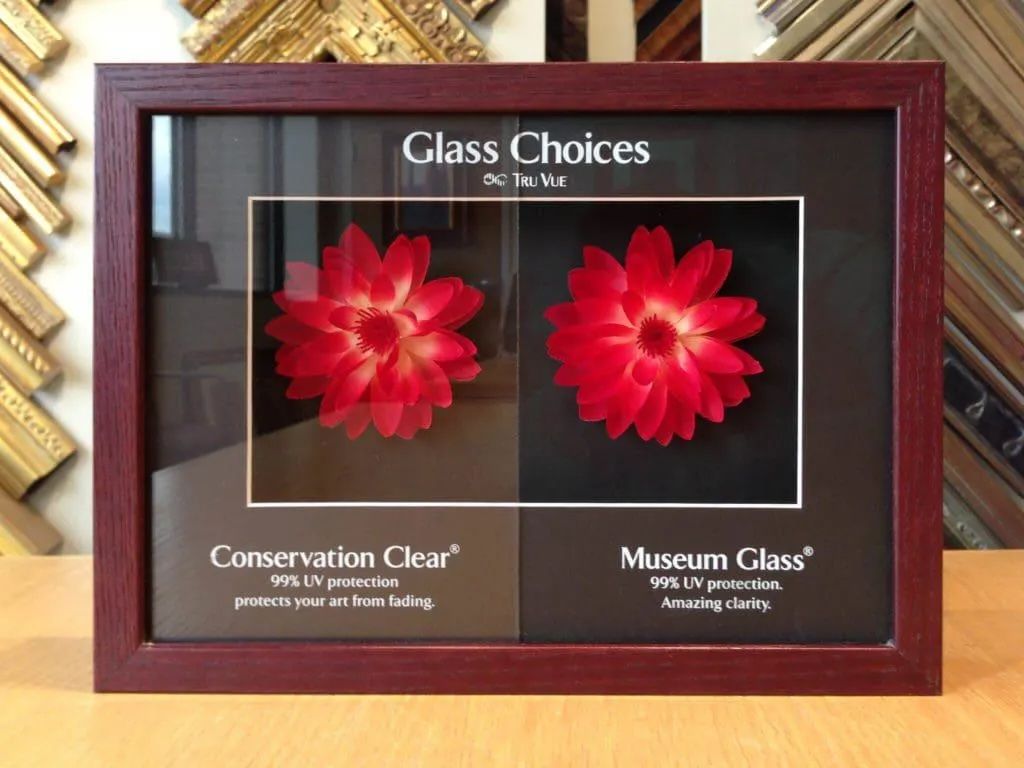
UV-Protective Framing Materials Compared
You have a few framing options at your disposal when it comes to protecting your precious artworks from UV damage:
Standard Glass
The most-inexpensive option, standard glass only provides protection from around half of the UV rays generated by the sun and artificial light sources. It causes a significant degree of glare and provides no shatter resistance.
UV-Filtering Glass
This type of framing glass has a UV-resistant layer that protects artwork from up to 99% of UV light. It offers high clarity but still causes glare.
Museum-Grade Glass
The next step up, museum-grade glass combines anti-glare with UV protection for optimal clarity and protection. As a premium form of framing glass, it commands a high price.
Acrylic (Plexiglass)
Acrylic provides nearly complete UV protection while also offering the best defense against physical impacts. It’s entirely shatterproof while still boasting impressive clarity.
UV Frame Glazing Comparison Chart
| Type | UV Protection % | Cost | Clarity |
|---|---|---|---|
| Standard Glass | 45-50% | Low | Basic, glare is common |
| UV-Filtering Glass | 97-99% | Medium | Very clear |
| Museum-Grade Glass | 99% | High | High clarity, no glare |
| Acrylic (Plexiglass) | 98% | Medium | High clarity, shatterproof |
How to Choose the Right Framing Material
To protect your investment or treasured keepsake, choosing one or the other of the glazing materials we’ve covered is a necessity. To decide which option is right for you, ask yourself the following questions:
- Is protection from UV rays and other environmental factors most important? If so, acrylic is the right choice — even if clarity isn’t optimal.
- Is affordability your top priority? If so, standard glass will do the trick. Just combine it with other anti-UV measures.
- Do you want to display the beauty of your art above all else? If so, museum-grade glass is the best option. It provides the perfect combination of ideal clarity and UV protection.
If you’re still not sure which framing option is best in your situation, contact us at FramePros. We’d be happy to lend our expertise and help you come to a decision.
Best Practices for UV Protection
Even the best glazing doesn’t fully protect art from UV damage. To keep your artworks in pristine condition for years to come, make sure you also follow these simple guidelines:
- Hang art away from windows and out of sources of direct light
- Use LED lighting instead of fluorescent or incandescent bulbs since it emits reduced UV
- Move art around the room periodically for even exposure
- Keep humidity at 40-50% for optimal art preservation
Trust FramePros to Protect Your Art
Putting art in a frame only enhances its beauty for a limited time unless proper UV-protection measures are put into place. At FramePros, we know the best approaches to protecting all types of art — from sports memorabilia to paintings to photographs. Whichever type of precious artwork you want to preserve, trust us to provide the protection you need to keep your art beautiful forever.
FAQs
Learn more about protecting your art from UV rays in the frequently asked questions below:
What causes artwork to fade over time?
UV exposure is the main cause of fading in artworks. Humidity and heat also play a role, and contaminants in the air can also damage art pigments. Plus, certain materials and pigments are inherently unstable and more subject to degradation over time.
Does regular picture frame glass protect against UV light?
Yes, normal framing glass (glazing) does provide moderate protection against UV light, filtering out up to 50% of UV radiation. However, it is not as effective at providing UV protection as other types of glass, such as UV-filtering and museum-grade glass. Even acrylic (plexiglass) provides better UV protection — though it offers inferior clarity compared to traditional glass glazing.
What is the difference between museum glass and regular glass?
Regular framing glass does not provide enhanced anti-glare or UV protection properties. Museum-grade glass has been treated with special chemicals that both reduce glare from reflected light and provide up to 99% protection from UV rays. As a result, museum glass is not as affordable as standard frame glazing.
Is UV protection necessary if artwork isn’t in direct sunlight?
Yes, UV protection is necessary to preserve artwork even if it isn’t displayed in direct sunlight. Indirect lighting from the sun also damages artwork, and so does direct or indirect light from artificial sources.
How long does UV-protective framing last?
UV-protective framing glass (glazing) generally lasts indefinitely. Outdated forms of UV glass coating could wear off in a relatively short amount of time, but newer techniques offer protection for decades. Some forms of UV-resistant glazing, such as plexiglass, offer protection that’s inherent to the material, meaning there’s no capacity for this protection to diminish.